
Just Starting With SSDI
If you're thinking about applying for Social Security Disability Insurance — or you're not even sure if you qualify — you're in the right place. This chapter walks you through everything from the basics of what SSDI is, to how much you could get paid, to what happens if you get denied.
No legal jargon, no runaround. Just straightforward answers to the questions most people have when they're first figuring this out.
Last updated: April 14, 2026 · 11 articles in this chapter
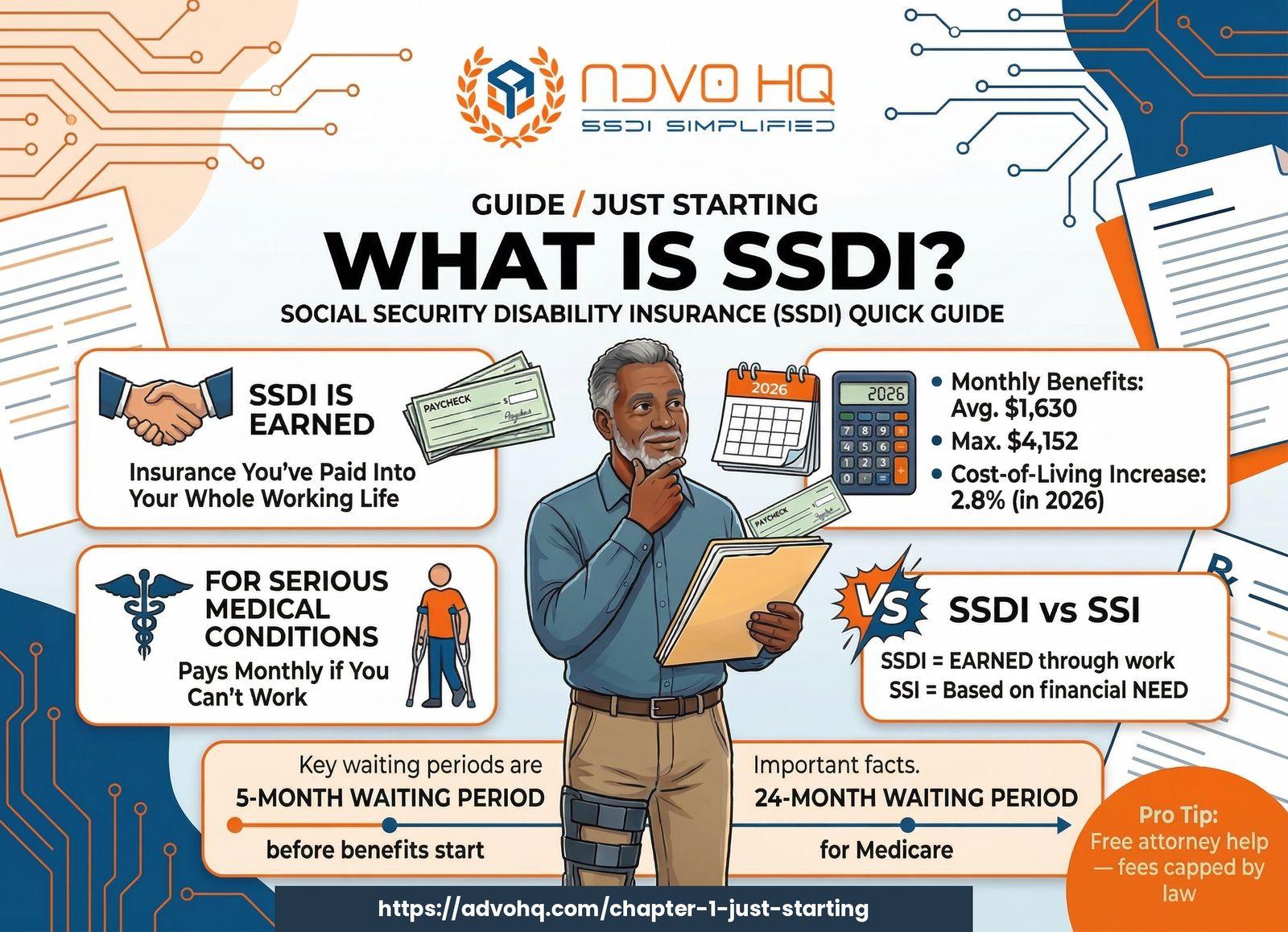
New to SSDI? Start here. These articles walk through what SSDI actually is, whether you qualify, and what to expect at every stage — before you file anything.
The Basics
What is SSDI?
Social Security Disability Insurance (SSDI) is a federal program that pays monthly benefits to people who can no longer work because of a serious medical condition.
Read article →Article 2 of 11Do I Qualify For SSDI?
To qualify for Social Security Disability Insurance, you need to meet three requirements: enough work history, a qualifying medical condition, and income below a certain limit.
Read article →Article 3 of 11How Work Credits Work
Work credits are how Social Security tracks whether you've worked long enough to qualify for SSDI. Think of them like stamps on a punch card — you need enough before you can cash in.
Read article →Article 4 of 11What Medical Conditions Qualify for SSDI?
There's no single list of conditions that "automatically" qualify you for SSDI. What matters is whether your condition prevents you from working for at least 12 months — and whether you can prove it.
Read article →Money and Working
How Much Will I Get Paid?
Your SSDI payment is based on your earnings history — not how severe your disability is. The more you earned (and paid into Social Security), the higher your benefit.
Read article →Article 10 of 11Can I Work While Applying or Receiving SSDI?
Yes, but there are strict limits. If you earn too much, SSA will decide you're able to work and deny or stop your benefits. Understanding the rules protects your benefits while giving you flexibility.
Read article →Applying and What Comes Next
How Do I Apply For SSDI?
You can apply for SSDI online, by phone, or in person. The application itself is not complicated, but gathering the right information beforehand makes a big difference in how smoothly the process goes.
Read article →Article 7 of 11What Happens After I Apply?
After you submit your SSDI application, Social Security uses a 5-step process to decide if you qualify. Understanding this process helps you know what to expect — and why decisions take 3-6 months (or longer).
Read article →Article 11 of 11What Happens After Approval
Congratulations — you've been approved for SSDI. Here's what to expect: when your payments start, how much back pay you'll receive, when Medicare kicks in, and what you need to know to keep your benefits.
Read article →If Things Don't Go as Planned
What If I Get Denied?
Getting denied is not the end. About two-thirds of initial SSDI applications are denied, but many people eventually get approved on appeal. The key is knowing your options and acting quickly.
Read article →Article 9 of 11Do I Need A Lawyer or Advocate?
You're not required to hire a lawyer, but the statistics are clear: people with representation win at significantly higher rates. And because disability attorneys work on contingency, there's no upfront cost.
Read article →Most people apply without a plan. Reading this guide first puts you ahead.
Most people don't apply for SSDI with a plan — they just fill out the forms and hope for the best. Reading through this chapter first puts you ahead of the game.
And if you're feeling overwhelmed, you're not alone — that's exactly why many people work with a disability attorney or advocate from the start. It costs nothing upfront, and it can make a real difference. We cover all of that in "Do I Need a Lawyer or Advocate?"
You don't need to figure all of this out at once.
Start with the articles that match where you are right now. If you're wondering whether you even qualify, begin with "Do I Qualify for SSDI?" and "How Work Credits Work."
If you're ready to file, jump to "How Do I Apply?" And if you've already been denied — don't panic. Read "What If I Get Denied?" before you do anything else.