
Initial Application
This chapter walks you through filing your SSDI application properly, avoiding common mistakes, and what you can expect during the initial review process.
Last updated: April 14, 2026 · 10 articles in this chapter
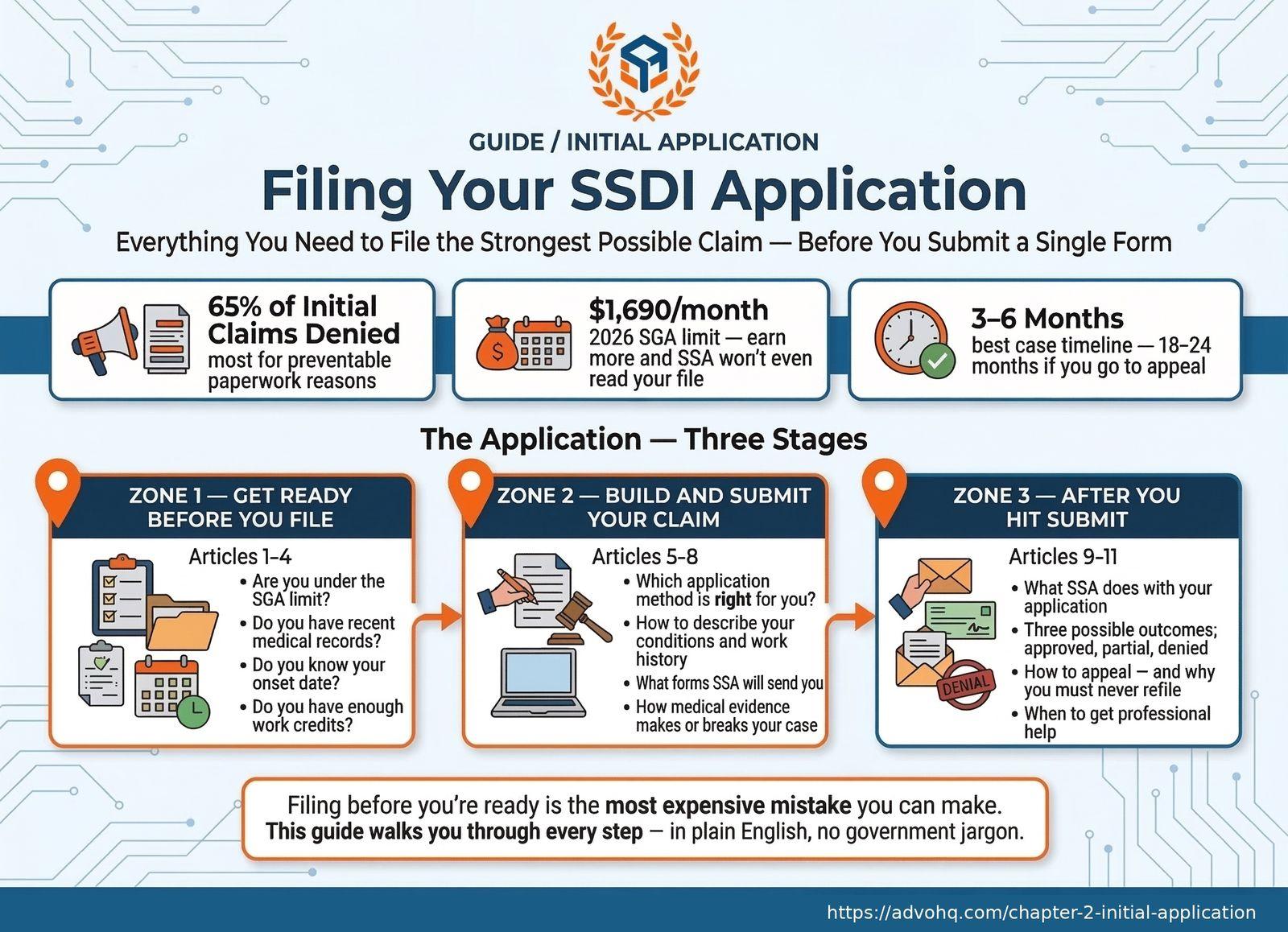
- Before You Apply: Are You Ready?
- Documents You’ll Need
- Choosing How To Apply
- Filling Out The Application
- The Medical Evidence That Matters Most
- Describing Your Disability
- Work History: Why It Matters More Than You Think
- Common Mistakes That Cause Denials
- Should You Get Help Before You Apply?
- What To Expect After You Hit Submit
Ready to apply? This chapter covers everything that goes into a strong initial SSDI application — from gathering documents to avoiding the mistakes that cause denials.
Before You Apply
Before You Apply: Are You Ready?
About 65% of first-time SSDI applications get denied. Not because most people don’t qualify—but because their applications are incomplete, missing key...
Read article →Article 2 of 10Documents You’ll Need
Your SSDI application is only as strong as the paperwork behind it. Missing documents are one of the top reasons claims get delayed or denied—and SSA...
Read article →Article 3 of 10Choosing How To Apply
There are three ways to apply for SSDI: online, by phone, or in person at your local Social Security office. The method you choose won’t affect whethe...
Read article →Filling It Out
Filling Out The Application
The SSDI application asks for a lot of detailed information, and the way you answer matters more than most people realize. Vague answers, missing date...
Read article →Article 5 of 10The Medical Evidence That Matters Most
Insufficient medical evidence is the #1 reason SSDI claims get denied. Not because the person isn’t disabled—but because the paperwork doesn’t prove i...
Read article →Article 6 of 10Describing Your Disability
How you describe your disability on paper matters just as much as the medical evidence behind it. The DDS examiner reviewing your claim doesn’t know y...
Read article →Article 7 of 10Work History: Why It Matters More Than You Think
Most people think SSDI is all about medical evidence. It’s not. Your work history is just as critical—because SSA uses it to decide whether you can st...
Read article →Avoiding Mistakes & Getting Help
Common Mistakes That Cause Denials
About 65% of initial SSDI applications are denied. That’s not because most applicants aren’t disabled—it’s because most applications have preventable...
Read article →Article 9 of 10Should You Get Help Before You Apply?
You’ve read 8 articles about how the SSDI application works. By now, you know it’s complicated. The forms are long. The evidence requirements are spec...
Read article →After You Submit
Most people apply without a plan. Reading this guide first puts you ahead.
Most people don't apply for SSDI with a plan — they just fill out the forms and hope for the best. Reading through this chapter first puts you ahead of the game.
And if you're feeling overwhelmed, you're not alone — that's exactly why many people work with a disability attorney or advocate from the start. It costs nothing upfront, and it can make a real difference. We cover all of that in "Do I Need a Lawyer or Advocate?"
You don't need to figure all of this out at once.
Start with the articles that match where you are right now. If you're wondering whether you even qualify, begin with "Do I Qualify for SSDI?" and "How Work Credits Work."
If you're ready to file, jump to "How Do I Apply?" And if you've already been denied — don't panic. Read "What If I Get Denied?" before you do anything else.